
 Daniel
•
November 14, 2026
•
16 min read
•
No comments
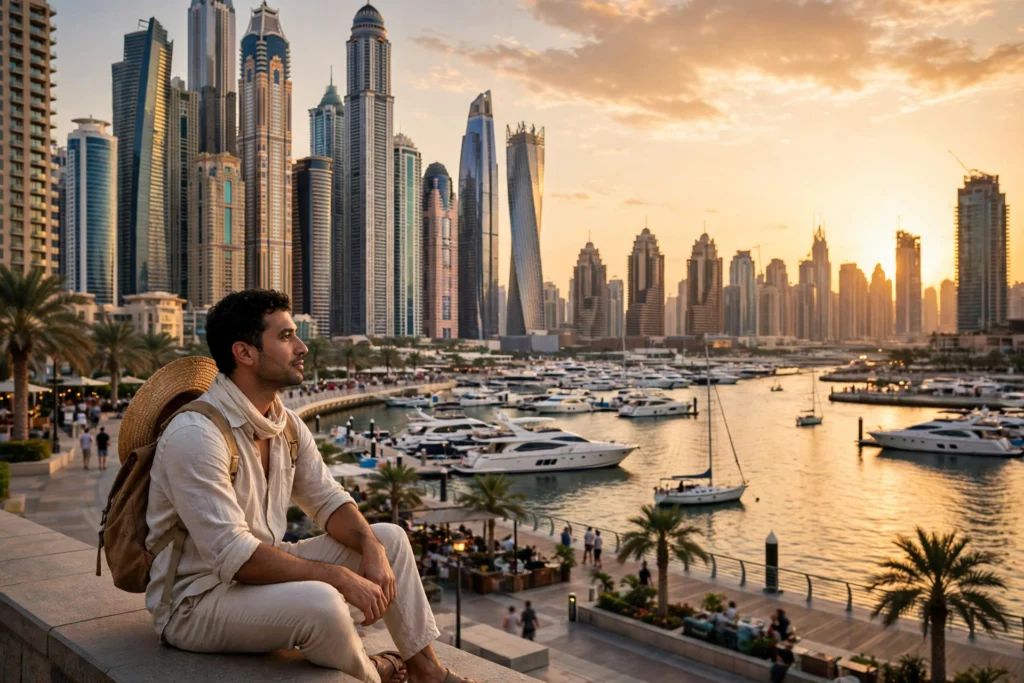
What to wear in Dubai comes down to two things: heat and respect. Days run 24 to 27 degrees in winter and 39 to 42 degrees in summer. In public places the rule is simple: cover your shoulders and knees. Swimwear stays at the beach and the pool. This guide gives you the exact outfit for every place you will go, from a mall to a mosque.
Dubai is home to more than 200 nationalities, and the official tourism board says almost all attires are accepted. There is no single dress law for tourists. The rule changes with the place you are in. A beach club, a souk, a mosque and a rooftop bar each expect something different. This guide to what to wear in Dubai walks through each one, with a Dubai packing list at the end. If you are still planning the trip, start with our Dubai travel guide.
The short answer to what to wear in Dubai is in this table. Find your setting, then read the section below it for the detail.
| Where you are | Wear this | Avoid this |
|---|---|---|
| Malls, metro, streets | Shoulders and knees covered; T-shirt, trousers, knee-length skirt or dress | Swimwear, see-through fabric, offensive slogans |
| Souks and old Dubai | Sleeved top with trousers or a long skirt; a little more cover than the mall | Beachwear, very short hems |
| Beach, pool, beach club | Swimwear, plus a cover-up for the walk back | Walking into a lobby, mall or restaurant in swimwear |
| Mosque | Loose clothes covering arms and legs; headscarf for women; shoes off | Shorts, sleeveless tops, tight or sheer fabric |
| Dinner, rooftop, nightlife | Smart casual; collared shirt, dark trousers, closed shoes | Shorts, flip-flops and trainers at high-end venues |
| Desert safari | Loose cotton or linen, closed shoes, a light jacket in winter | Sandals that slip off, skirts if you ride a camel |
| Ramadan, in public, in daylight | Your usual clothes, one notch more modest | Anything that reads as revealing |
| Ski Dubai | A warm layer under your clothes; gear can be rented there | Shorts and a T-shirt; it is kept cold inside |

The month decides how hard the heat hits. The modesty rule stays the same all year. Only the fabric weight and the evening layer change, so what to wear in Dubai is one base outfit with small changes. Here is what to wear in Dubai in each season, with the temperatures that drive the choice.
What to wear in Dubai in summer is the hardest choice of the year. Daytime highs run 39 to 42 degrees, and coastal humidity often passes 80 percent. Loose, light, long sleeves and trousers beat shorts and tank tops in this heat, because they keep the sun off your skin and let sweat dry. Cotton and linen breathe. Tight synthetics trap heat. Add a wide hat, strong sunglasses and sunscreen, even for the short walk from a taxi to a mall door.
The trap most visitors miss is the cold indoors. Malls, museums, restaurants and the metro are cooled to around 20 degrees, sometimes lower. The jump from a 41 degree street to a 20 degree room is sharp. Carry a light layer, a thin cardigan or a scarf, to put on inside, even in August. Plan outdoor time for before 9am or after 7pm. No outfit fixes a midday walk in this heat, and that is the first rule of what to wear in Dubai in summer. Our summer guide lists the indoor sights that work best in these months.
Winter is the easy season for what to wear in Dubai. Daytime highs run 24 to 27 degrees, with low humidity and almost no rain. Your base is light, modest clothing: sleeved tops, trousers or knee-length skirts, and swimwear for the beach and pool. Evenings drop to 14 to 18 degrees, so pack a light jacket or sweater for rooftop dinners, evening walks and the desert, where it feels colder once the sun sets. You will not need a heavy coat, but what to wear in Dubai in winter still needs that evening layer. A cool evening by the water at the Marina can feel cold in a T-shirt.
March starts near 28 degrees and May climbs toward 37 degrees, with rising humidity. October is still hot at around 35 degrees, and November settles near 31 degrees. Dress as you would for summer in October, with breathable fabric and sun cover. By November the weather is comfortable and the crowds have not fully arrived. A scarf is worth carrying in these months too, for dusty days when the shamal wind blows sand in from February into April.
Malls are where most visitors meet the Dubai dress code first. The official tourism board, Visit Dubai, says swimwear is fine at the beach and pool, but not appropriate in business districts and shopping malls. It also says dressing conservatively is appreciated in historic neighbourhoods and places of worship. The UK Foreign Office puts the same rule in firmer words: dress modestly in public areas like shopping malls, women should cover shoulders and knees, underwear should not be visible, avoid transparent clothing and slogans that could offend, and wear swimming attire only on beaches or at swimming pools. For the official word on what to wear in Dubai in public, read the UK government travel advice page for the UAE before you travel.
In practice, what to wear in Dubai in a mall is simple: a T-shirt and trousers, or a knee-length dress, pass everywhere. Fitted clothes are fine. Very short shorts, a crop top with short shorts, or a bikini top will draw a look or a polite reminder from staff at the entrance. The Dubai Mall and Mall of the Emirates post reminders at their doors. Men are held to the same standard: no shirtless walking, and no gym vest in a mall. There is no published dress rule for the metro, but it is a public space, so the same covered shoulders and knees are the safe default. See our Dubai shopping guide for which malls suit which kind of trip.
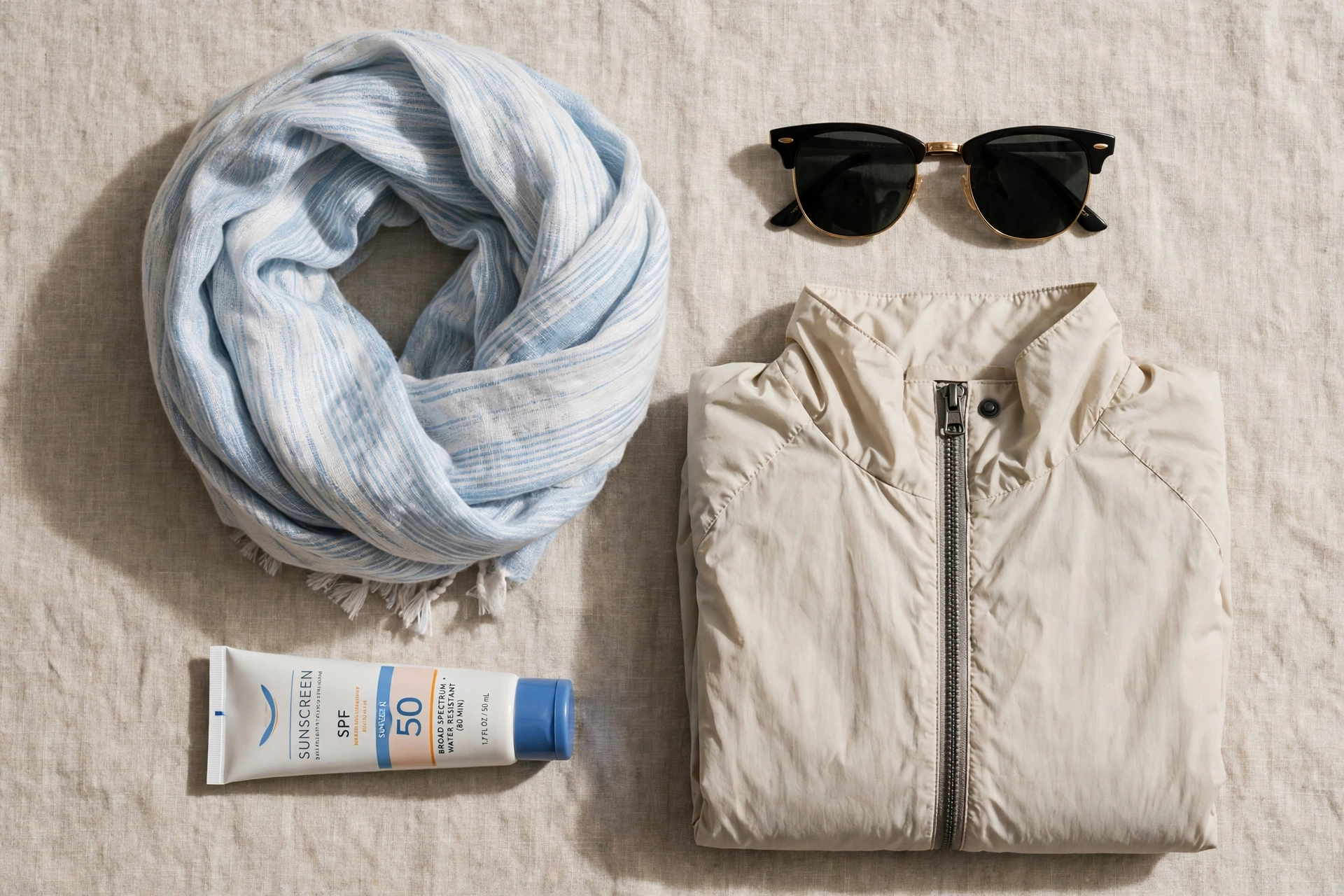
One item solves most of what to wear in Dubai in a mall: a light scarf or overshirt in your day bag. It covers shoulders in five seconds, doubles as a layer against the air conditioning, and works for a mosque visit too. Malls are cold inside all year, so the scarf earns its place even when the dress code does not need it.
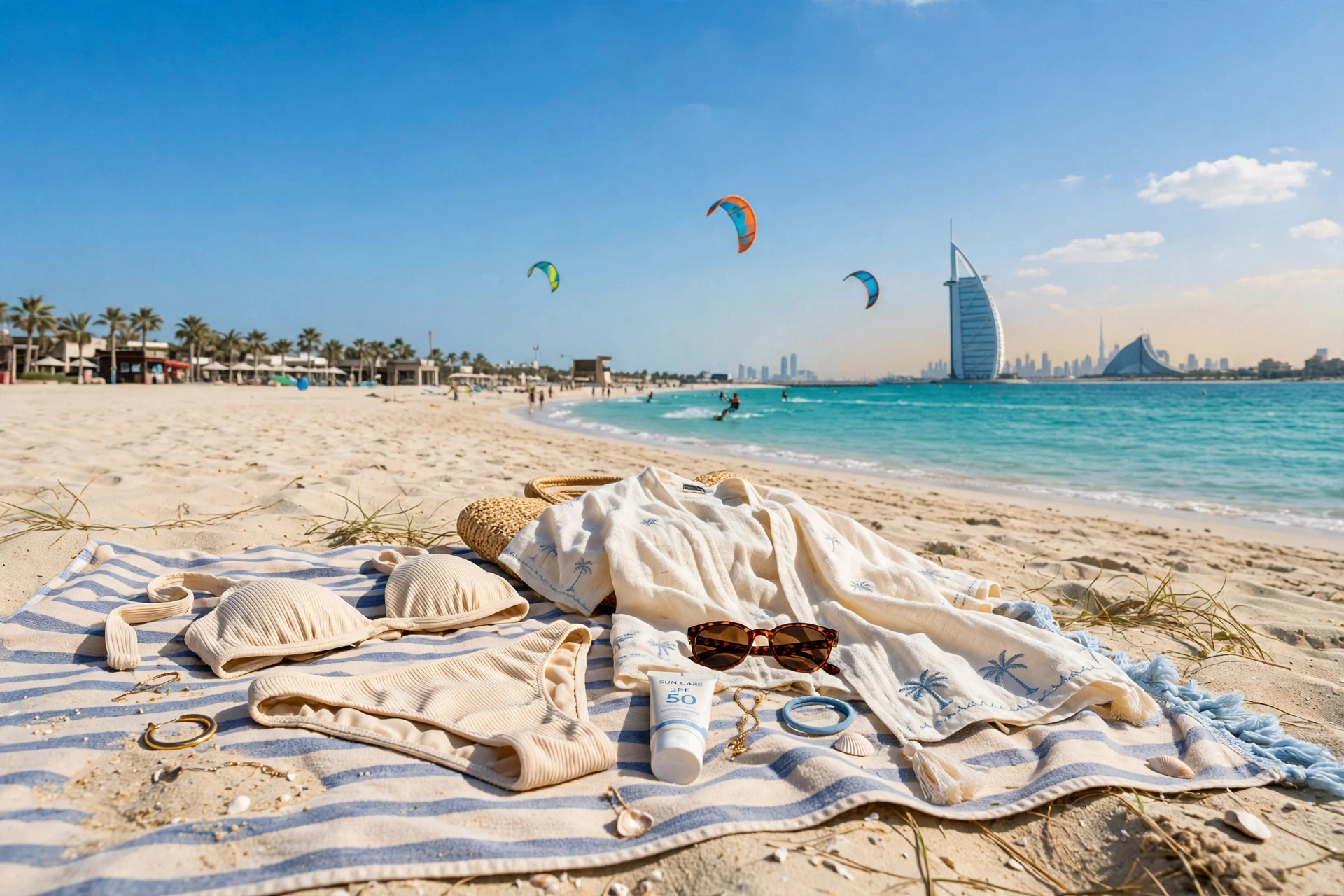
At the beach, the pool and beach clubs, normal swimwear is the norm. Bikinis, one-pieces, swim trunks and burkinis are all fine at public beaches and hotel pools. The sea stays warm enough to swim even in winter, above 20 degrees, so the beach is a year-round plan, and what to wear in Dubai at the beach barely changes by month.
The single rule is that swimwear stops at the edge of the sand. The moment you leave the beach or the sunbed to walk through a hotel lobby, into a mall, or to a restaurant, put on a cover-up, a dress, or shorts and a top. This applies to men and women alike. Topless and nude sunbathing are not permitted anywhere in Dubai, including public beaches. Beach clubs and pool venues run their own dress codes and entry rules on top of the Dubai dress code, so check the venue page when you book a day bed rather than assuming. For the best stretches of sand, see our Kite Beach guide.
Mosques are the one place with a real Dubai dress code, and it applies to everyone. Women cover their hair with a scarf, plus their arms to the wrists and their legs to the ankles, in loose, non-sheer clothing. Men wear long trousers and a top with sleeves, no shorts. Everyone removes their shoes before entering the prayer hall. Visit Dubai states the same rule for what to wear in Dubai at a mosque on its practical information page: clothing that covers shoulders, arms and legs, and headscarves for women. The full official guidance is on the Visit Dubai practical information page.
Jumeirah Mosque is the best-known mosque in Dubai that welcomes non-Muslim visitors. Entry is through the Sheikh Mohammed Centre for Cultural Understanding and its Open Doors, Open Minds guided tour, which runs Saturday to Thursday at 10:00 and 14:00, lasts about 75 minutes, and is closed on Friday. Registration opens 30 minutes before each session and no advance booking is needed. Abayas and headscarves are usually available to borrow at the door, and kanduras for men, but bring your own scarf if you have one, so you are not relying on borrowed stock. Avoid tight or transparent clothes underneath, because the point of what to wear in Dubai at a mosque is modesty, not just coverage. Check the current tour fee and times on the official Jumeirah Mosque visit page before you go, because the two official pages list different fees. The Fact Check section below explains the clash.
Evenings are where what to wear in Dubai splits in two. Casual restaurants and coffee shops have no written dress code. Just be dressed, and leave the beachwear behind. Fine dining, rooftops and clubs are stricter, and they publish their own rules, so check the venue page before you book. One collared shirt, one pair of dark trousers and one pair of closed shoes covers every door in the city for men. For women, a dress or smart separates work at the same level.
Visit Dubai names the split plainly: party spots and rooftop lounges are known for a stylish dress code, while laid-back beach venues are casual, and the financial district skews high-end while the beachfront is flip-flop friendly. Upscale clubs sometimes refuse trainers, shorts or casual sandals for men. What to wear in Dubai for a smart dinner is therefore one step up from your daytime outfit, not a second wardrobe. If you are picking a place to eat, our Dubai Marina restaurants guide lists venues by price and setting.
A desert safari is an evening outdoors, not a city day out, so what to wear in Dubai on a desert safari means dressing for sand, sun and a cold finish. Wear loose cotton or linen, and closed shoes. Visit Dubai advises strappy sandals or sneakers, because loose slippers get caught in soft sand. If you plan to ride a camel or a dune buggy, wear shorts or trousers rather than a skirt or a dress. A scarf helps against sun and dust during the day, and a light jacket is worth packing for winter evenings, when the desert cools fast after sunset. Avoid black and tight clothes: black holds the heat, and tight fabric traps it. Leave delicate fabrics at the hotel, because everything you wear will come back sandy.
During Ramadan, nothing in the written Dubai dress code changes, but the margin for error narrows. The UK Foreign Office asks visitors to follow local dress codes in this month, because clothing that falls short of local norms causes more offence than it would at another time. Eating, drinking and smoking in public during daylight hours is also sensitive in Ramadan, so the month calls for a little more care in public all round. Pack one notch more modestly for what to wear in Dubai during Ramadan than you would in another month, keep a scarf in your bag, and be relaxed about it. Beachwear is still acceptable at hotel beaches and pools during Ramadan. Ramadan 2027 is expected around 8 February 2027, though the exact dates are confirmed by moon sighting, so check the dates for your trip before you pack.
Pack for what to wear in Dubai in four settings, not for one temperature: the pool, the mall, the mosque or souk, and one good evening out. That frame keeps the Dubai packing list short. Here is the Dubai packing list that covers all four.
One outfit can carry a whole Dubai day if you plan it. Start at the beach in swimwear with a cover-up over it. For the midday mall, the cover-up comes off and the trousers and sleeved top underneath do the work. For dinner, the same trousers with a fresh top and closed shoes are enough. The scarf in your bag bridges the mosque stop in between. That is the whole trick of what to wear in Dubai: one modest base, plus a scarf and a cover-up. Our 1-day Dubai itinerary shows how a beach morning, a mall afternoon and a Marina evening fit into a single day.
Most guides agree on the basics, and the table stakes in this post match them. Three things still get stated wrong, so here is the correction with the source.
First, the Jumeirah Mosque tour fee. The Sheikh Mohammed Centre for Cultural Understanding programme page lists AED 45 per person. The mosque’s own public-visit page lists AED 55 per person. Both are official pages for the same tour, and they disagreed when last checked in September 2026. This post states neither figure as settled. Check the live fee on the official page before you go.
Second, the claim that Dubai has no dress code at all. Visit Dubai and the UK Foreign Office both set out clear expectations for malls, historic areas and mosques, and some venues publish their own written rules. Global Village, for example, requires respectful attire with covered shoulders and knees for male and female guests at all times. The code is light in tourist areas, but it exists.
Third, the claim that women must wear an abaya in Dubai. They do not, anywhere except inside a mosque. The same goes for the idea that private beaches have no rules: public decency rules apply across the city, and topless and nude sunbathing are not permitted anywhere, public or private.
Yes. For what to wear in Dubai, shorts are fine and common on the beach and at the pool. In malls, souks and mosques, the expectation is covered knees, so knee-length shorts pass while very short shorts can draw a reminder from staff. If your day includes a mosque visit, shorts will not get you in at all, so plan long trousers. In summer, loose long trousers are more comfortable than shorts, because they keep the sun off your legs.
No. For what to wear in Dubai, women do not need to cover their hair anywhere except inside mosques. This is one of the most common misunderstandings about the city. Abayas are available to borrow at the Jumeirah Mosque entrance, but you do not need to carry or wear one for a general tourist visit. A light scarf in your bag covers the mosque stop without changing how you dress for the rest of the day.
Yes, at beaches and hotel pools. Bikinis are part of what to wear in Dubai at the beach, and they are normal at beaches, beach clubs and private hotel pools. The rule is about where the swimwear stops: walking through a mall, a restaurant or a public street in a bikini is not acceptable, so carry a cover-up and put it on before you leave the beach. The same applies to men walking shirtless away from the beach or pool.
Loose, light-coloured cotton or linen with long sleeves and trousers, a wide-brimmed hat, strong sunglasses and high-SPF sunscreen. Long sleeves keep the sun off your skin better than a tank top, and light colours hold less heat. Carry a light layer for the cold indoors, because malls and the metro sit near 20 degrees even in August. Plan outdoor time for before 9am or after 7pm, when the heat eases.
Light layers by day and a jacket for the evening. Daytime highs run 24 to 27 degrees from December to February, so cotton or linen shirts, lightweight trousers and comfortable shoes are the core. Evenings drop to 14 to 18 degrees, and the desert feels colder still, so a light jacket or sweater is worth packing. Swimwear still belongs in the bag, because the sea stays warm enough to swim all winter.
Men have it easy in Dubai. Knee-length shorts, polo shirts, cotton T-shirts, chinos and linen shirts cover the daytime. Add one pair of long trousers and one collared shirt with closed shoes for mosques, heritage areas and smart evenings. Avoid gym vests in malls, shirtless walking anywhere except the beach or pool, and shorts at high-end nightlife venues, where trainers and sandals can also be refused at the door.
Your usual clothes, one notch more modest. Cover shoulders and knees in public, keep a scarf in your bag, and skip anything revealing during daylight hours. The written rules do not change in Ramadan, but local feeling runs higher, so modest dress is noticed more. Beachwear is still fine at hotel beaches and pools. Ramadan 2027 is expected around 8 February 2027, with the exact dates confirmed by moon sighting.
Written by
Daniel
Daniel is the travel writer behind Go Dubai Now, covering Dubai's attractions, parks, restaurants and practical travel topics. Every guide is researched against official sources — government portals, operator websites and current local listings — and updated regularly so timings, prices and rules stay accurate. His goal is simple: answer the exact questions travelers ask before they go, with no fluff and no outdated information.
Handpicked guides, itineraries and money-saving tips for your Dubai holiday — all in one place.