 Daniel
•
June 21, 2026
•
12 min read
•
19 comments
Daniel
•
June 21, 2026
•
12 min read
•
19 comments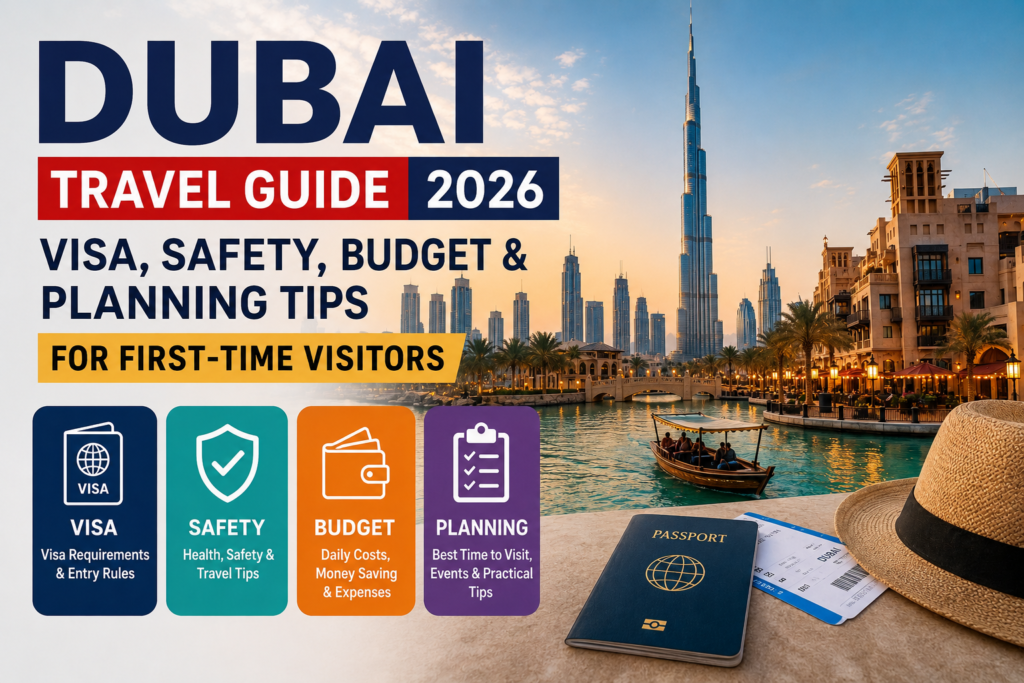
Before you get into routes, fares, and transport apps (we’ve already covered that in detail in our Travel in Dubai transport guide, there’s a different set of questions every first-time visitor needs answered first: Is it safe to go? Do I need a visa? How much should I actually budget? What should I wear, and what about insurance, money and holidays? This guide answers exactly that the full planning side of a Dubai trip, fully updated for 2026.
This question has a genuinely different answer in mid-2026 than it did even a few months ago. Regional tension tied to the wider Iran situation led several governments to caution against UAE travel earlier this year, and a handful of airlines paused routes. That’s now shifting quickly.
In June 2026, following a US-Iran memorandum aimed at reopening the Strait of Hormuz, the UK’s Foreign, Commonwealth and Development Office dropped its “all but essential travel” warning for the UAE, and Australia ended its “do not travel” guidance the same week. UK tour operators reported bookings jumping almost immediately, with some travellers asking to fly within days of the change. For anyone researching a Dubai Travel Guide, this highlights the strong recovery in visitor confidence and the city’s continued appeal as a leading global destination. For context on how resilient demand has stayed, Dubai welcomed almost 19.6 million international overnight visitors in 2025, a 5% increase on the year before and the third consecutive year of growth.
Advisory status still varies by country, so check your own government’s current guidance before booking:
| Country | Advisory Status (June 2026) |
|---|---|
| UK | Advisory lifted — normal guidance |
| Australia | “Do not travel” notice ended |
| US | Level 3 — “reconsider travel” |
| Canada | Advises avoiding non-essential travel |
| France | Advises against all but essential travel |
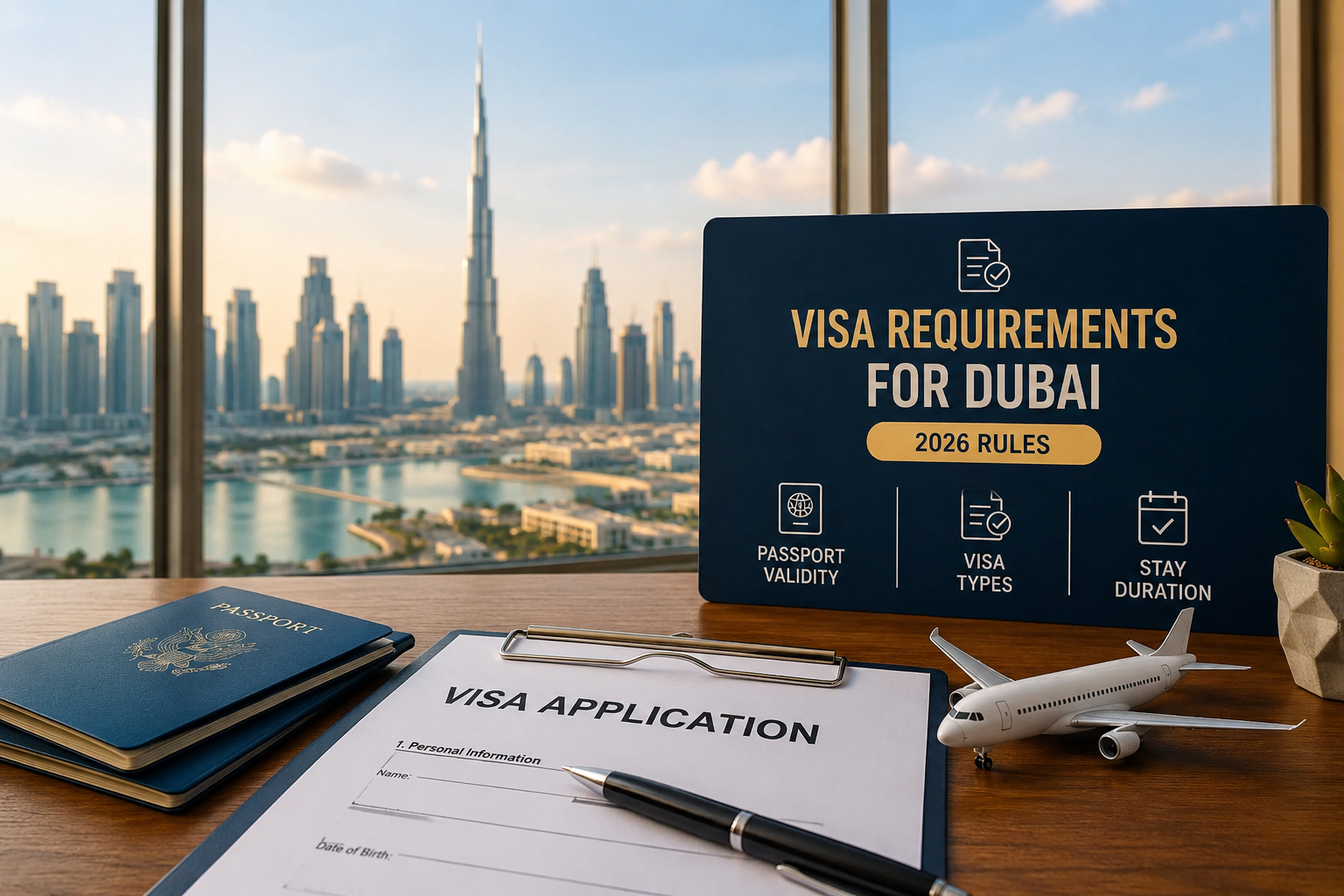
Most leisure travellers don’t need to apply for anything in advance. Citizens of more than 30 countries including the US, UK, EU member states, Canada, Australia and New Zealand receive a free visa-on-arrival valid for 30 to 90 days depending on nationality, stamped directly at immigration.
If your country isn’t on that list, you’ll need a UAE e-visa, applied for online before departure through a licensed agent or your airline. Here’s a rough breakdown of what’s available:
| Visa Type | Validity | Best For |
|---|---|---|
| Visa-on-arrival (eligible nationalities) | 30 or 90 days, single entry | Short leisure trips, no advance paperwork needed |
| Standard tourist e-visa | 30 days, single or multiple entry | Nationalities not on the visa-on-arrival list |
| Express tourist e-visa | 30 days | Travellers booking flights on short notice |
| 90-day long-stay tourist visa | 90 days, extendable | Longer stays, remote workers, repeat visitors |
Either way, have these ready before you apply or fly:
Visa categories and fees occasionally get revised, so confirm your specific nationality’s current rules on the official UAE government portal before locking in flights. Avoid third-party visa sites that charge inflated service fees the official process is straightforward enough to handle directly in most cases.
| Period | Weather | What to Expect |
|---|---|---|
| November – March | 15°C – 28°C, mild | Peak season, higher hotel rates, packed attractions |
| April – May / Sept – Oct | 28°C – 38°C | Shoulder season, fewer crowds, better hotel deals |
| June – August | 38°C – 48°C, very humid | Quiet outdoors, but malls, waterparks and Dubai Summer Surprises keep the city active indoors |
For winter-level comfort at shoulder-season prices, aim for late October or early March. If you’re planning your itinerary using a Dubai Travel Guide, keep in mind one scheduling detail that often surprises first-time visitors: the work week runs Sunday to Thursday, with Friday and Saturday serving as the weekend. This affects everything from traffic patterns and restaurant brunch timings to public transport schedules. Be sure to check Friday-specific metro operating hours when planning your daily travel around the city.
The UAE dirham (AED) is pegged to the US dollar at roughly 3.67 AED = 1 USD, so it doesn’t fluctuate the way other currencies do, which makes budgeting more predictable. Cards are accepted almost everywhere, though it’s worth carrying some cash for traditional abras, souks and tipping.
| Travel Style | Daily Budget (AED) | What’s Included |
|---|---|---|
| Backpacker / budget | 250 – 350 | Hostel/budget hotel, metro/bus, street food and casual dining, 1 paid attraction every couple of days |
| Mid-range | 600 – 900 | 3-4 star hotel, mix of metro and Careem/Uber, sit-down meals, 1 paid attraction daily |
| Luxury | 1,500+ | 5-star hotel, private transfers, fine dining, premium experiences |
ATMs are widely available and most international cards work without issue, though notifying your bank before travel avoids blocked transactions. A local eSIM is the easiest way to stay connected without roaming charges.
Tipping isn’t legally required in Dubai, but it is widely expected in tourist-facing services and is often covered in a good Dubai Travel Guide. Restaurants may add a service charge automatically, although it does not always go directly to staff, so leaving an additional 10% in cash is appreciated for good service. Taxi drivers generally do not expect a tip, but rounding up the fare is common practice. Hotel porters and housekeeping staff typically receive AED 5–10 per service as a gesture of appreciation.
Visiting between October and May? Add the city’s famous flower park to your plan with our Dubai Miracle Garden guide.
Airport exchange counters are convenient but usually offer weaker rates than exchange houses in the malls or city centre. If you’re carrying cash, exchange a small amount on arrival for immediate needs and the rest once you’ve found a better rate in town. Most transactions, including taxis and souk purchases, are comfortable in either AED or with a card, so there’s rarely a need to carry large amounts of cash.
Healthcare in Dubai is high quality but not free for visitors, and hospital costs without insurance can be significant. Comprehensive travel insurance that explicitly covers the UAE is strongly recommended as covered above, this was the most common stumbling block for travellers earlier in 2026 when advisories were still in place, and some insurers are still updating policy wording to reflect the current situation.
A few practical notes worth knowing before you go:
Etisalat and du are the UAE’s two main telecom providers, both with kiosks at the airport offering tourist SIM packages with data, calls and texts bundled together. For most visitors, an eSIM purchased online before departure is the simplest option it activates the moment you land, skips the airport queue, and avoids juggling a physical SIM swap. Either way, having data ready from the moment you land matters more than it might elsewhere, since ride-hailing apps, the RTA journey planner and most restaurant menus assume you’re connected.
A few dates worth planning around, since they affect everything from opening hours to traffic patterns:
If your trip overlaps with Ramadan, expect shorter operating hours at malls and attractions during the day, livelier evenings after iftar, and daytime eating/drinking restricted to designated areas as a sign of respect none of it should put you off visiting, but it’s worth building into your itinerary expectations.
Dubai is more relaxed than many first-time visitors expect, but a few norms genuinely matter:
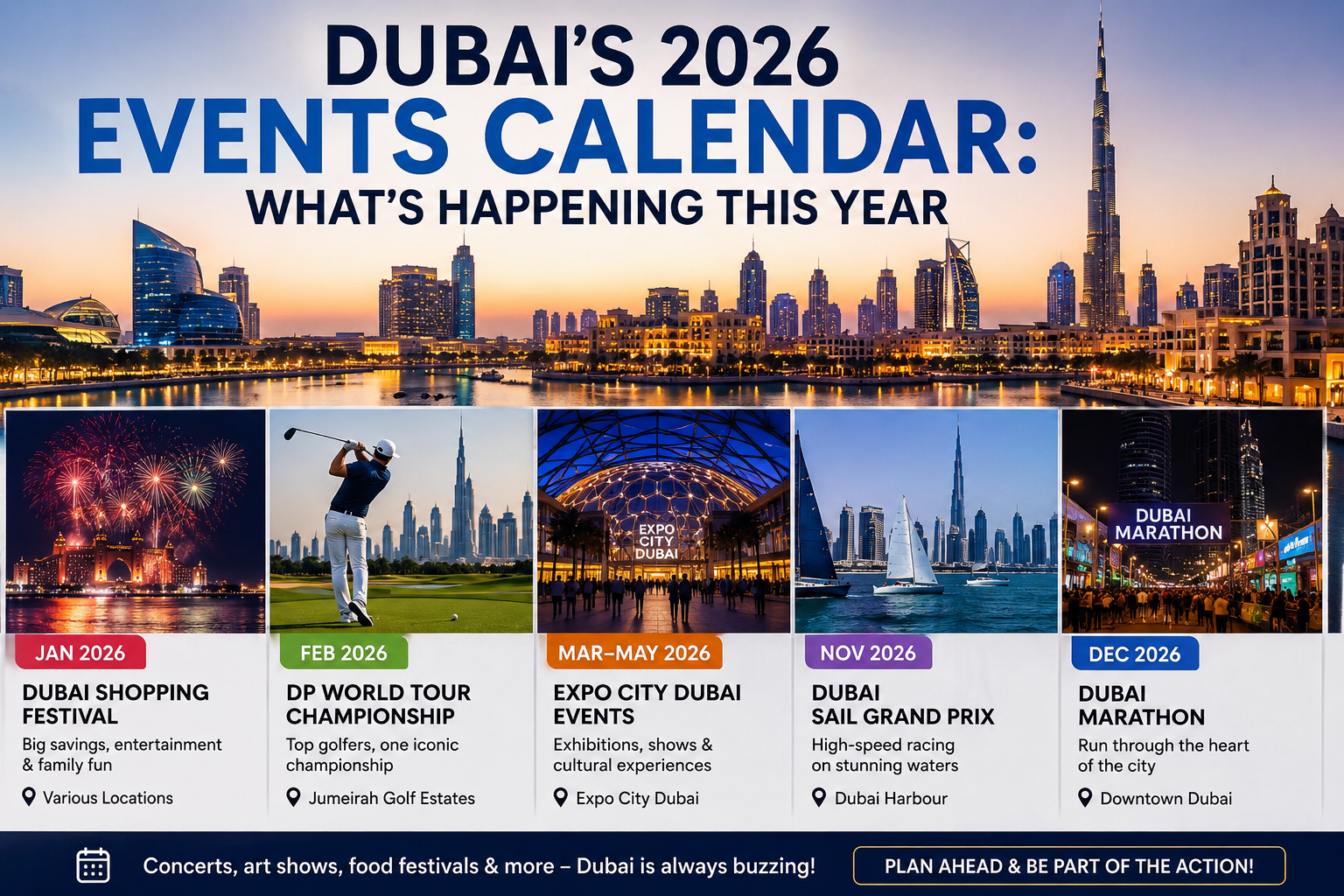
The UAE has designated 2026 its “Year of the Family,” which means more family-oriented programming and events woven through the calendar than in previous years. Key dates to plan around:
2026 has also brought a wave of new hotel debuts (Six Senses, Baccarat, Gran Meliá), new malls in Sobha Hartland and Nad Al Sheba Gardens, and new dining concepts across the city, so even repeat visitors following a Dubai Travel Guide will notice that the city has evolved significantly since their last visit. If any of these dates overlap with your travel window, book accommodation and event tickets well ahead, as hotel rates around major events can rise quickly and availability may become limited.
If you have a few extra days, Dubai’s location makes several worthwhile day trips genuinely practical.
Roughly 1 to 1.5 hours away by car, taxi, or shuttle bus, Abu Dhabi is the most popular day trip from Dubai. The Sheikh Zayed Grand Mosque is the headline stop — one of the largest mosques in the world and free to visit, though modest dress is required and abayas are provided at the entrance for women who need them. The Louvre Abu Dhabi and Yas Island (home to Ferrari World and Yas Waterworld) round out a full day, though trying to combine the mosque, the Louvre and Yas Island in a single day is ambitious most visitors pick two.
Tucked into Dubai’s mountainous exclave near the Oman border, Hatta is a genuine change of scenery: cooler air, the turquoise Hatta Dam lake, hiking trails, and kayaking. It’s about 90 minutes from central Dubai by car and is best done as a self-drive or organised tour rather than public transport, since coverage out there is limited.
Just 30–45 minutes from Dubai, Sharjah offers a more traditional, culture-focused contrast it’s the UAE’s official cultural capital, with museums, heritage areas, and a different pace from Dubai’s skyline. It’s an easy half-day add-on if you’re short on time.
For self-drive day trips, see the car rental section of our transport guide for what you’ll need and what it costs.
Yes. The UK and Australia lifted their travel advisories against the UAE in June 2026 following a US-Iran memorandum to reopen the Strait of Hormuz. The US, Canada, and France still advise some caution, so check your home country’s current guidance before booking.
Travellers from 30+ countries, including the US, UK, EU, Canada, and Australia, get a free visa-on-arrival valid for 30 to 90 days. Other nationalities need to apply for a UAE e-visa online before departure.
Budget travellers can manage on AED 250-350 a day, mid-range travellers should plan for AED 600-900 a day, and luxury stays with fine dining can exceed AED 1,500 a day, excluding flights.
November to March offers the most comfortable weather (15-28°C) and is peak season with higher prices. April-May and September-October are shoulder months with fewer crowds. June-August is very hot (up to 48°C) but suited to indoor attractions and lower hotel rates.
Yes, at licensed hotels, bars, and restaurants. Drinking in public spaces, including unlicensed beaches, and public intoxication are not permitted.
Avoid very revealing clothing in malls, government buildings, and religious sites — shoulders and knees should be covered in these areas. Swimwear is fine at pools and beaches but should not be worn while walking through public areas.
Written by
Daniel
Daniel is the travel writer behind Go Dubai Now, covering Dubai's attractions, parks, restaurants and practical travel topics. Every guide is researched against official sources — government portals, operator websites and current local listings — and updated regularly so timings, prices and rules stay accurate. His goal is simple: answer the exact questions travelers ask before they go, with no fluff and no outdated information.
Handpicked guides, itineraries and money-saving tips for your Dubai holiday — all in one place.