 Daniel
•
November 26, 2026
•
18 min read
•
No comments
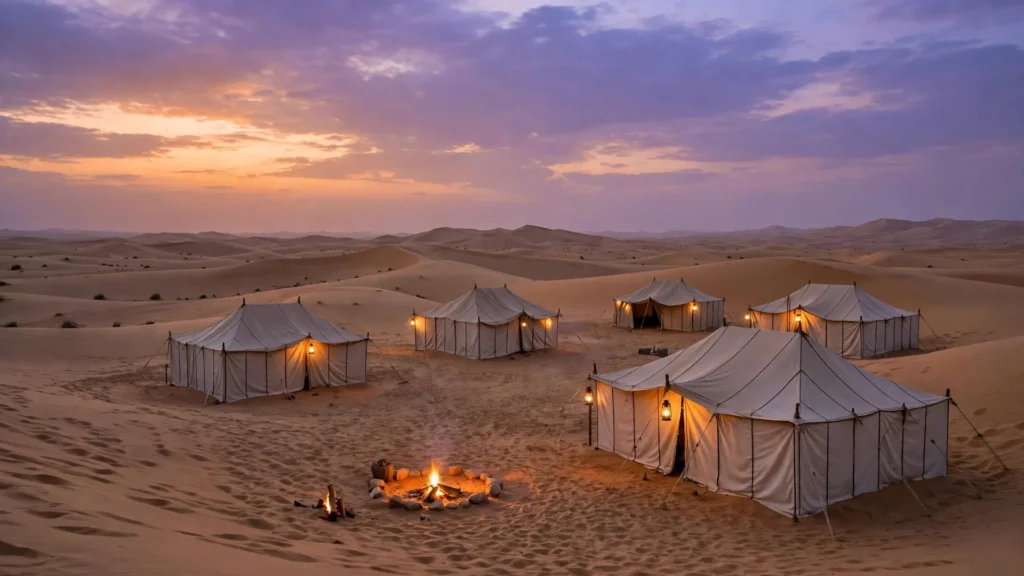
Desert camping Dubai is the simplest way to spend a winter night under the stars without leaving the emirate. The best places to camp are the open desert around Al Qudra and Al Marmoom, the red dunes of Lahbab, and the managed pitches of Hatta Campsite, and you can either pitch your own tent or book an organised camp that provides the tent, dinner and activities. This guide covers the spots, costs, rules and packing, so you can plan a desert camping Dubai trip with confidence.
Winter changes everything in the Dubai desert. Daytime temperatures sit around 24 to 30 degrees Celsius from November to March, the evenings turn cool and clear, and the sky fills with stars once the city lights fall behind you. That is why desert camping Dubai works best as a winter activity, and why the official camping season runs from 1 November to 30 April.
You have two broad choices for desert camping Dubai. Self-camping means you drive out with your own tent, food, water and gear. An organised desert camp Dubai operators run means you book a package, get picked up from your hotel, and everything from the tent to the barbecue dinner is ready when you arrive.
Four areas cover almost every desert camping Dubai trip. Each one suits a different kind of camper, so pick the desert camping Dubai spot that matches your plans rather than the one with the prettiest photos.
| Spot | Best for | Drive from Downtown Dubai | Facilities | Cost to camp |
|---|---|---|---|---|
| Al Qudra desert and Al Marmoom | First-time self-campers and families | About 30 to 45 minutes | None; cycle track and lakes nearby | Free for a short stay |
| Lahbab red dunes | Organised overnight safaris and photography | About 1 hour 10 minutes | Operator camps: tents, toilets, dinner | From AED 130 per person with an operator |
| Hatta Campsite, Hatta Wadi Hub | Beginners who want a managed pitch | About 90 minutes | 18 pitches, fire pit, barbecue, washrooms, showers, security | Check the operator for the nightly rate |
| Al Ruwayyah winter camp plots | Long-stay seasonal family camps | About 30 minutes | Allocated plots, fenced | Permit only, UAE nationals |
Al Qudra is the classic starting point for desert camping Dubai, and it sits inside the Al Marmoom Desert Conservation Reserve. The reserve was established in January 2018 as the first unfenced nature conservation reserve in the UAE, and it covers about 10 per cent of the emirate of Dubai. It holds more than 10 kilometres of lakes and is home to over 200 species of native birds, so the setting feels far wilder than the short drive suggests.
Camping is allowed in the wider Al Qudra desert, away from the water, and raised barbecue stands are allowed there too. The one hard rule is the lakes themselves: camping, bonfires, barbecues and dog walking are banned at Al Qudra Lake, with a fine of AED 500 per violation, doubled for a repeat offence. Visit the lakes and the nearby Love Lake by day, then pitch your tent in open desert with no signs against it. Al Qudra camping works best on a Friday or Saturday in the cool months, but arrive before sunset to pick a flat spot in daylight.
Al Qudra suits a normal car on the approach roads, but do not drive onto soft sand without a proper four-wheel drive. See our Al Qudra Lakes Dubai guide for the lakes themselves.
Lahbab, off the E44 Hatta road about 70 kilometres from central Dubai, is where the sand turns a deep orange red. It is the setting most desert camping Dubai operators use for their overnight safaris, and the best choice if you want big dunes, a sunset photo stop and a full camp programme in one booking. The drive takes about 1 hour 10 minutes from Downtown Dubai.
Self-camping at Lahbab is possible, but most visitors come on an organised trip, because the dunes are soft and steep and a normal car cannot cross them. Operator camps sit on the edge of the dunes, with tents, toilets, a barbecue area and a stage for the evening shows. If you drive yourself, stay on firm tracks and keep clear of the safari convoys. Lahbab is also the best spot in this guide for sandboarding and sunrise photographs. A desert camping Dubai trip to Lahbab pairs well with a daytime desert safari, and our Dubai desert safari guide explains the daytime options in full.
Hatta Campsite is the easiest desert camping Dubai option for a beginner. Run by Dubai Holding at Hatta Wadi Hub, it has 18 numbered pitches, each about 11 by 9 metres for up to five people and one car. Every pitch has a fire pit, a private barbecue station and outdoor seating, and the site has shared washrooms and showers, 24-hour security and food trucks nearby. You bring your own tent and gear. The campsite reopened for its ninth season on 28 September 2026, about 130 kilometres, or 90 minutes, from Dubai in the Hajar Mountains.
Hatta is a mountain campsite, not open desert, so the night feels different from a dune camp. The air is cooler, the stars are sharp, and you can add hiking and mountain biking at Wadi Hub during the day. Book through the official Hatta Resorts channels, and book early for long weekends, because the 18 pitches fill fast. If you want a bed rather than a tent, Hatta Dome Park glamping starts from AED 1,120 a night according to current listings. The campsite nightly rate was not published on the pages checked, so ask Hatta Resorts for the rate on your date. See our Hatta Dam guide for the area.
Al Ruwayyah is the official seasonal camping area for desert camping Dubai in the 2026-27 season. Dubai Municipality opened registration on 26 October 2026 for 600 camps running from 1 November 2026 to 30 April 2027. Plots are booked for three to six months through wintercamp.dm.gov.ae or the DubaiNow app, and registration is for UAE nationals. This is a long-stay family camp scheme.
The biggest decision in any desert camping Dubai plan is whether to book an organised camp or to camp on your own. An organised camp removes the work and the risk, while self-camping gives you freedom, quiet and a much lower cost.
| What matters | Organised desert camp | Self-camping |
|---|---|---|
| Price per person | About AED 130 to AED 1,200 a night | Free in open desert; gear costs only |
| Tent and bedding | Provided, with mattress | You bring everything |
| Food | Barbecue dinner and breakfast | You cook or bring your own food |
| Activities | Dune bashing, camel ride, shows | Your own plans only |
| Toilets and showers | Provided at the camp | None |
| Transport | Hotel pickup included | Your own car, and a 4×4 helps |
| Best for | First-time visitors | Experienced campers |
An organised desert camping Dubai package suits anyone visiting Dubai for the first time, anyone without a car, and any family that wants the experience without the logistics. You get picked up in the afternoon, usually between 2.00pm and 3.30pm, and you are back at your hotel by about 9.00am the next morning. The camp provides the tent, the mattress, the blankets, the dinner and the breakfast, and the guides handle the driving on the dunes. You only need warm clothes, a phone charger and a small overnight bag. You also get the classic desert evening: dune bashing, a sunset stop, a short camel ride, sandboarding, henna, Arabic coffee and dates, then a barbecue dinner with live shows.
Self-camping suits residents with their own gear and a suitable car. A short overnight trip in the open Dubai desert does not need a permit, according to Dubai Municipality as reported by Gulf News, so a weekend tent in the open desert is free. You choose your own spot, you cook your own food, and you get the quiet that a busy operator camp cannot offer. The trade-off is that you carry everything: tent, sleeping bags, water, food, a raised barbecue or fire pit, a torch, a first aid kit and a way to take all your rubbish home. Self-camping is not the right choice for a first desert camping Dubai night if you have no off-road experience. Soft sand traps cars quickly, and recovery is not free. Go with an experienced friend, camp near other campers, and tell someone where you are going.
A typical overnight desert safari follows the same shape across operators: hotel pickup, a dune drive, a sunset photo stop, a camel ride and sandboarding, then Arabic coffee and dates, henna and traditional dress photos, a barbecue buffet dinner, and live shows at the camp. After the evening crowd leaves, the overnight guests stay on for a campfire, stargazing and a night in a tent. Breakfast comes after sunrise, and the return drive reaches the city by about 9.00am.
The tent is the part to check before you book any desert camping Dubai package. Budget packages use shared Bedouin-style tents with mattresses and bedding, while higher-priced packages give you a private tent, and premium packages add a private car and an air-conditioned lounge. Ask whether bedding and blankets are included, because some budget operators ask you to bring a light sleeping bag from October to March. A desert camping Dubai night in January is cold enough that thin bedding will spoil your sleep.
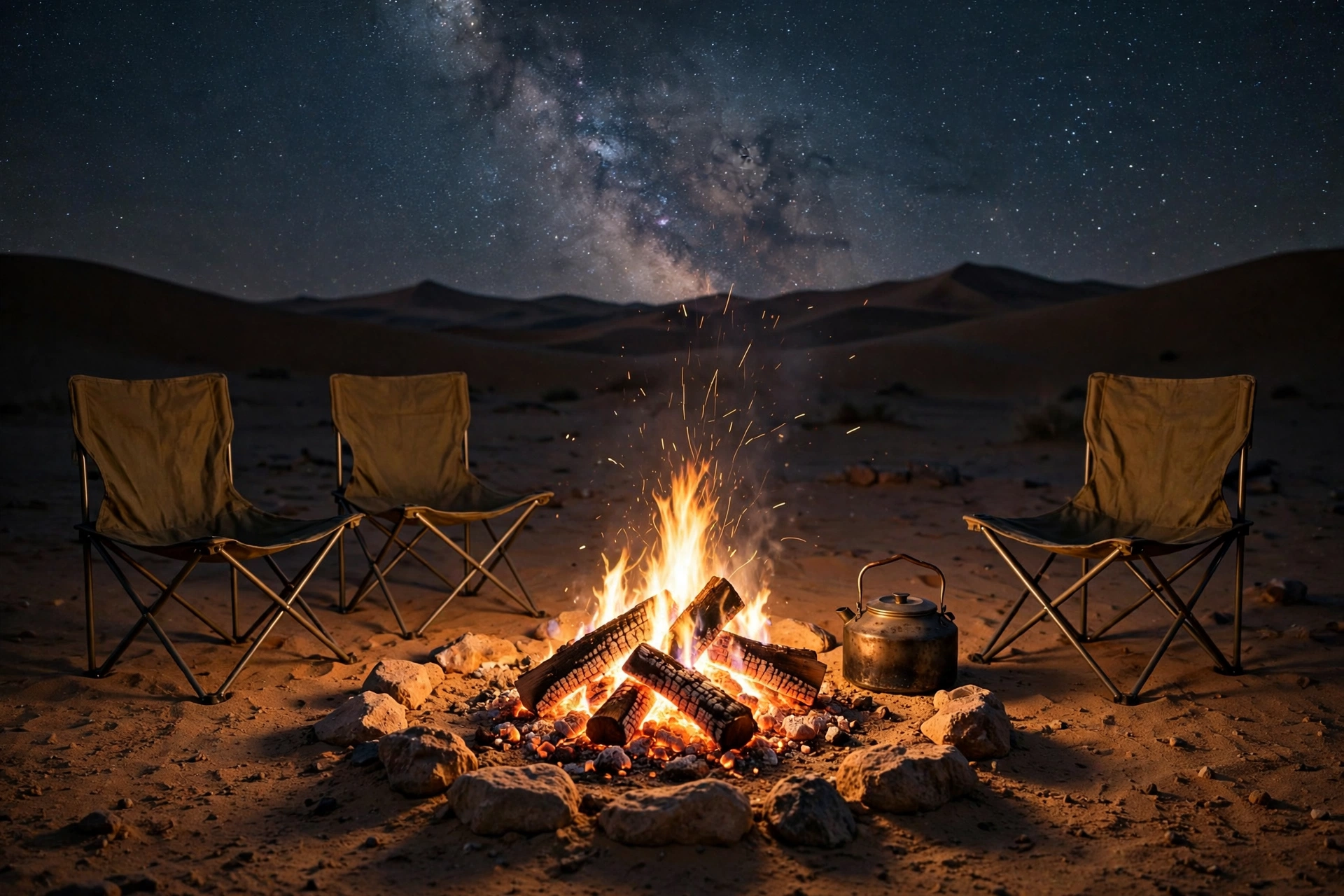
Stargazing is one of the best reasons to stay overnight rather than taking an evening safari. Once the camp lights dim, the sky opens up, and on a clear night near a new moon the stars are far brighter than anything you see from the city. Food is generous: the barbecue buffet usually covers grilled meats, kebabs, salads, hummus and tabbouleh, with soft drinks, tea, coffee and mineral water. Tell the operator about dietary needs when you book.
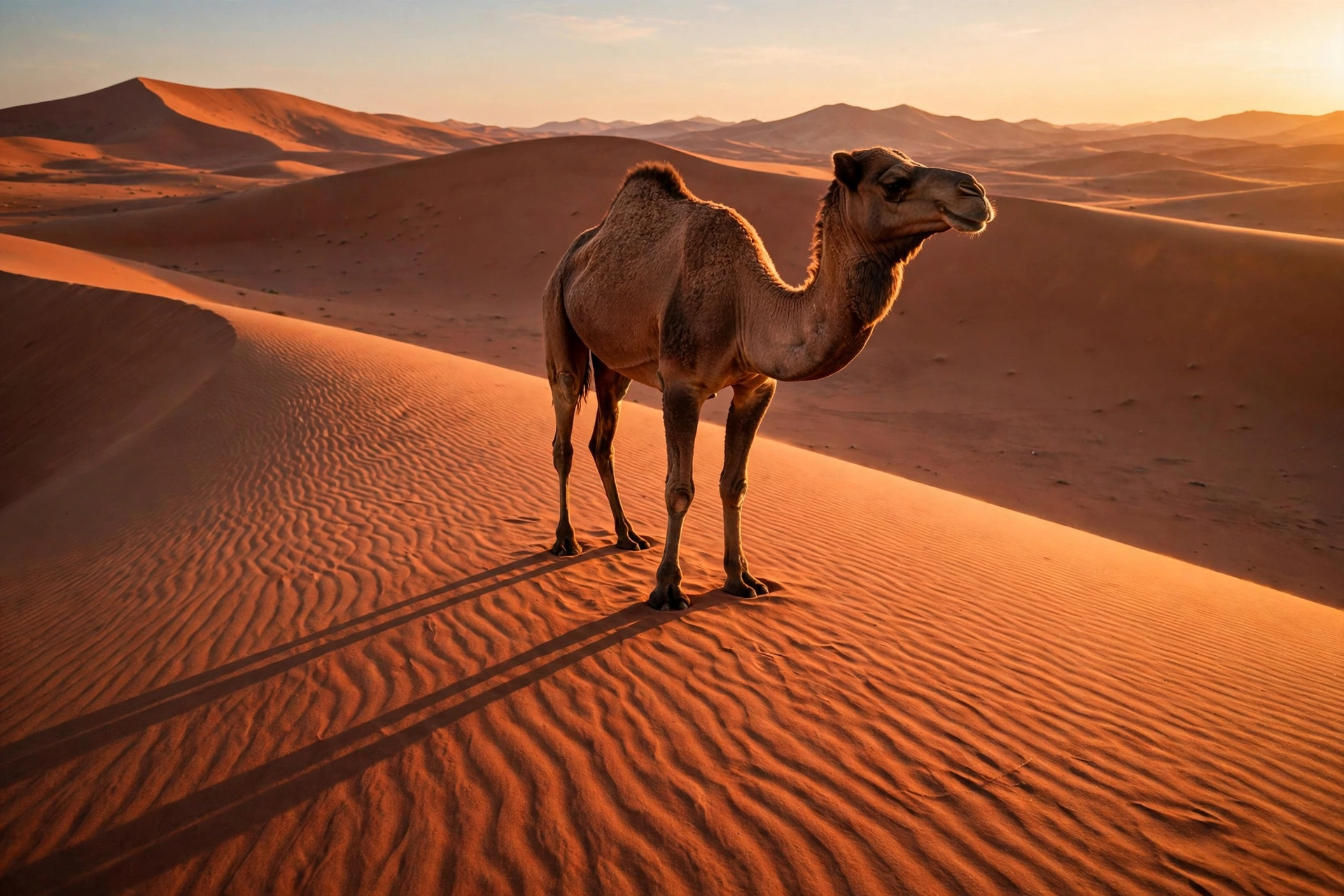
Desert camping Dubai prices vary widely, because the same night can be a budget group safari or a private luxury camp. The table below uses operator prices checked on 26 November 2026. Every figure is a starting price that can rise on weekends, public holidays and peak winter dates.
| Option | Typical price per person | What you get |
|---|---|---|
| Budget overnight safari, shared car and tent | From AED 130 | Pickup, dune bashing, camel ride, dinner, shows, shared tent, breakfast |
| Mid-range overnight safari, Lahbab red dunes | From AED 189 to AED 400 | Evening safari, tent, dinner, shows, campfire, breakfast |
| Premium overnight safari, private car and tent | From AED 399 to AED 1,200 | Private 4×4, longer dune drive, VIP seating, private tent |
| Self-camping in open desert | Free | No fee for a short stay; you supply tent, food, water and gear |
| Hatta Campsite pitch | Check the operator | Managed pitch with fire pit, barbecue, washrooms; bring your own tent |
| Seasonal Al Ruwayyah plot | Permit fee, UAE nationals only | Allocated plot for three to six months; last published fee 44 fils per sq m per week (Oct 2024); 2026-27 fee not stated |
The cheapest honest figure is the budget overnight safari from AED 130 per person, which covers the full evening programme, a night in a shared tent and breakfast. Mid-range packages from AED 189 to AED 400 add a private tent or a better camp, and premium packages from AED 399 to AED 1,200 add a private car, a longer dune drive and VIP service. A desert camping Dubai trip does not need to cost a fortune, but the cheapest package is not always the best value. Read recent reviews and confirm whether hotel pickup is free or charged extra.
Watch for extras that are not in the headline price. Ask any desert camp Dubai operator for the full total in writing before you pay. Quad bikes and dune buggies are usually add-ons, often around AED 120 to AED 150 for a 30-minute quad ride and around AED 299 for a buggy, based on current operator listings. Drinks from the camp bar, a private tent upgrade and a longer camel trek can also cost extra. A desert camp Dubai booking should state the full total before you pay, so ask for it in writing.
Packing for desert camping Dubai is mostly about the temperature drop after sunset. The city may feel warm at 6.00pm, but the desert can be 5 to 10 degrees cooler than the city at night. Pack for a warm day and a cold night.
For an organised desert camping Dubai trip, pack light: a small overnight bag with warm clothes, toiletries, a phone charger and a water bottle is enough, because the camp provides the tent, the food and the bedding. For self-camping, pack as if no help is coming: extra water, extra food, a spare tyre and a jack, a shovel, a tow rope and a charged phone, with your camp location shared with someone at home.
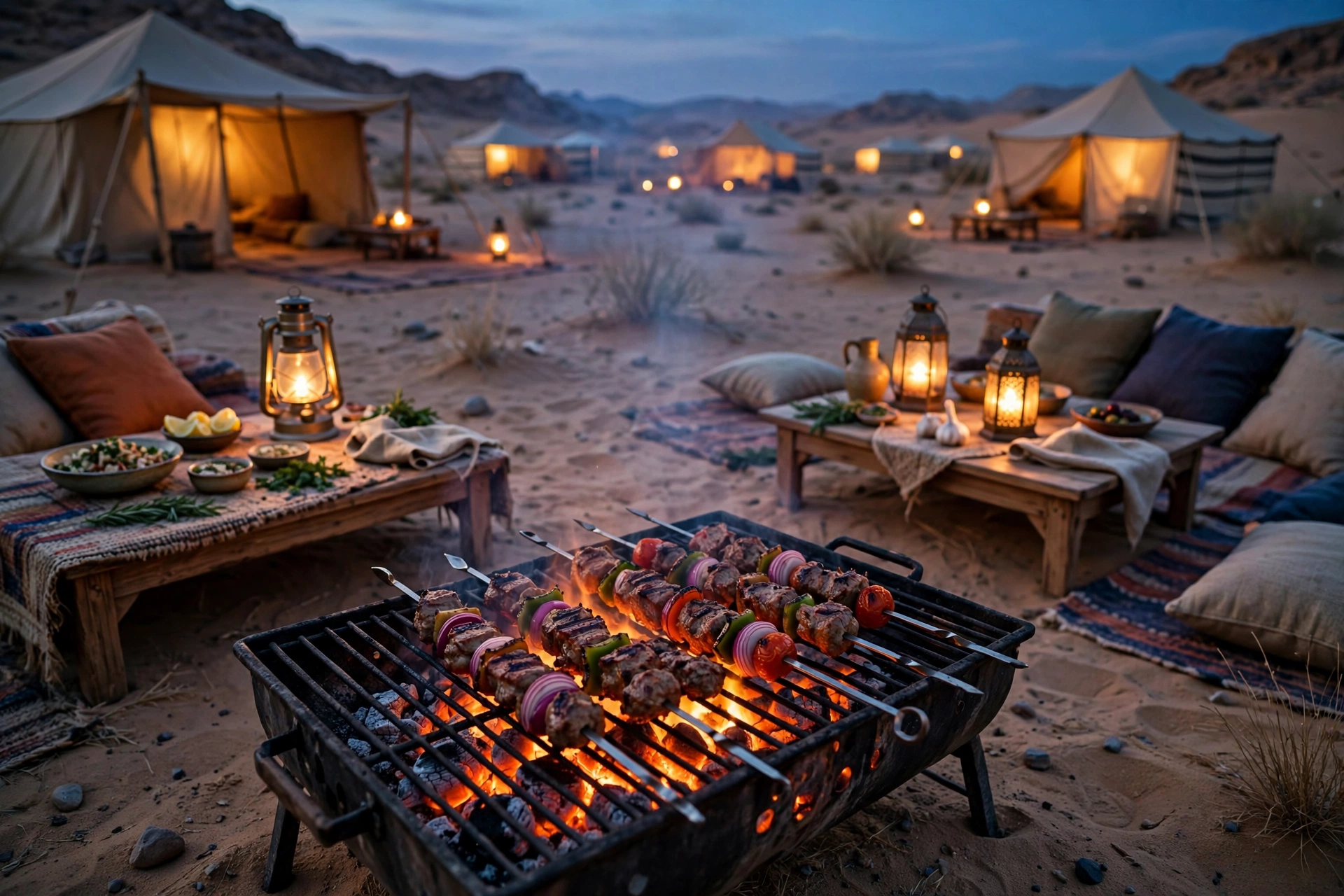
Desert camping Dubai is easy and enjoyable when you follow the rules, and the rules are mostly common sense. The desert is a living landscape, not an empty lot, and the fines exist because a small number of visitors damaged it. Read the signs at your spot, because the rules can change from season to season.
Fires are the biggest rule to get right. Never light a fire directly on the sand. Use a raised barbecue stand or a fire pit, keep the fire small, and put it out fully before you sleep. Camping, fires, barbecues and dog walking are banned at Al Qudra Lake, with a fine of AED 500 per violation, doubled for a repeat offence. The wider Al Qudra desert allows raised barbecue stands, and Hatta Campsite provides a fire pit at every pitch.
Leave no trace. Take every scrap of rubbish home, including food waste and charcoal. Do not cut trees or pick plants for firewood, and bring your own wood or charcoal. Do not feed, chase or disturb wildlife, and keep dogs on a lead where they are allowed. The Al Marmoom reserve is a conservation area, with stricter rules than the open desert outside it. Read the background at Wikipedia: Al Marmoom Desert Conservation Reserve before you plan a trip inside it.
Driving rules matter as much as camp rules. Inside the Al Marmoom reserve, driving off the tarmac and onto the dunes is restricted to a small number of licensed operators, so do not take a 4×4 off-road there on your own. On the seasonal camp plots, the speed limit is 20 kilometres per hour. Never drive across a dune crest without checking what is on the other side, and never camp in a wadi or where rain could send water through your site. If rain is forecast, stay home. Check the current rules with Dubai Municipality before you go, because the schemes change each season. The seasonal winter camp scheme is published through Dubai Municipality, and the 2026-27 season runs from 1 November 2026 to 30 April 2027 at Al Ruwayyah.
The best time for desert camping Dubai is November to March, with December to February offering the coolest nights and the clearest skies. January is the coolest month, with desert nights often falling to 10 to 15 degrees, and sometimes near 8 degrees in open desert. March stays pleasant, and by April the days are hot again.
| Month | Typical day in Dubai | Typical desert night | Verdict for camping |
|---|---|---|---|
| November | About 30 degrees | About 18 to 21 degrees | Excellent |
| December | About 26 degrees | About 13 to 17 degrees | Excellent |
| January | About 24 degrees | About 11 to 15 degrees, sometimes near 8 degrees | Best month |
| February | About 26 degrees | About 12 to 16 degrees | Excellent |
| March | About 29 degrees | About 17 to 20 degrees | Very good |
| April to October | 34 degrees and above | Hot and humid | Avoid |
Weekends are the busiest time for desert camping Dubai, and Friday and Saturday nights at Al Qudra can feel crowded. Public holidays and long weekends fill the organised camps first, so book those dates at least a few weeks ahead. For a wider winter plan, our things to do in Dubai in winter guide covers the season, and our things to do in Dubai in December guide covers the festive month. If you are building a full trip around your desert night, our 3-day Dubai itinerary shows how it fits into three days, and our best time to visit Dubai guide covers the seasons across the year. A desert camping Dubai trip also pairs well with a night safari: the official Visit Dubai listings include overnight safaris with a telescope session and a hot air balloon flight at sunrise, and you can compare them on Visit Dubai: overnight desert safari experiences.
Yes, with limits. A short overnight trip in the open Dubai desert does not need a permit, according to Dubai Municipality as reported by Gulf News. Camping is allowed in the wider Al Qudra desert, but it is banned at Al Qudra Lake itself, with a fine of AED 500 per violation. Long-stay seasonal camps need a permit.
An organised overnight desert safari costs from about AED 130 per person for a budget shared package to about AED 1,200 per person for a premium private package, based on operator prices checked on 26 November 2026. Mid-range packages run from about AED 189 to AED 400 per person. Self-camping is free for a short stay, apart from gear, food, water and fuel.
Al Qudra desert is the best place for a first self-camping trip, because it is close to the city and easy to reach. Lahbab red dunes are the best place for an organised overnight safari, with big dunes, a sunset stop and a full camp programme. Hatta Campsite is the best place for a beginner who wants a managed pitch.
No. Camping, bonfires, barbecues and dog walking are banned at Al Qudra Lake, with a fine of AED 500 per violation, doubled for a repeat offence. You can camp in the wider Al Qudra desert away from the water, where raised barbecue stands are allowed.
A standard overnight desert safari includes hotel pickup and drop-off, dune bashing, a sunset stop, a camel ride, sandboarding, a barbecue dinner, live shows, a campfire, stargazing, a night in a tent with bedding, and breakfast the next morning. Premium packages add a private car and a private tent. Quad bikes, dune buggies and bar drinks are usually extra.
November to March is the best time for desert camping Dubai, with December to February offering the coolest nights and clearest skies. January is the coolest month, with desert nights often falling to 10 to 15 degrees, so pack warm layers. The official camping season runs from 1 November to 30 April.
Desert nights in December to February often fall to 10 to 15 degrees Celsius, and can dip near 8 degrees in open desert on a clear, still night. City nights sit around 15 to 17 degrees, so the desert feels noticeably colder than the coast. Pack a warm jacket and a sleeping bag for your desert camping Dubai night, even if the day was warm.
You need a proper four-wheel drive only if you plan to drive onto soft sand. Al Qudra and Hatta Campsite can be reached on firm roads in a normal car, as long as you park on firm ground. Lahbab red dunes need a 4×4 with low-range gearing, and the dunes are best left to operator drivers.
Yes, with the right choice. An organised desert camp is the best option for families, because the camp provides the tent, the food, the toilets and the activities, and the guides handle the driving. Check the operator age rules before you book.
Desert camping Dubai is one of the best winter nights the emirate offers: a barbecue under the stars, a campfire, a cold clear dawn and a sunrise over the dunes. Pick your spot, check the rules, pack warm, and book early for a weekend in the cool months.
Written by
Daniel
Daniel is the travel writer behind Go Dubai Now, covering Dubai's attractions, parks, restaurants and practical travel topics. Every guide is researched against official sources — government portals, operator websites and current local listings — and updated regularly so timings, prices and rules stay accurate. His goal is simple: answer the exact questions travelers ask before they go, with no fluff and no outdated information.
Handpicked guides, itineraries and money-saving tips for your Dubai holiday — all in one place.