 Daniel
•
October 10, 2026
•
10 min read
•
No comments
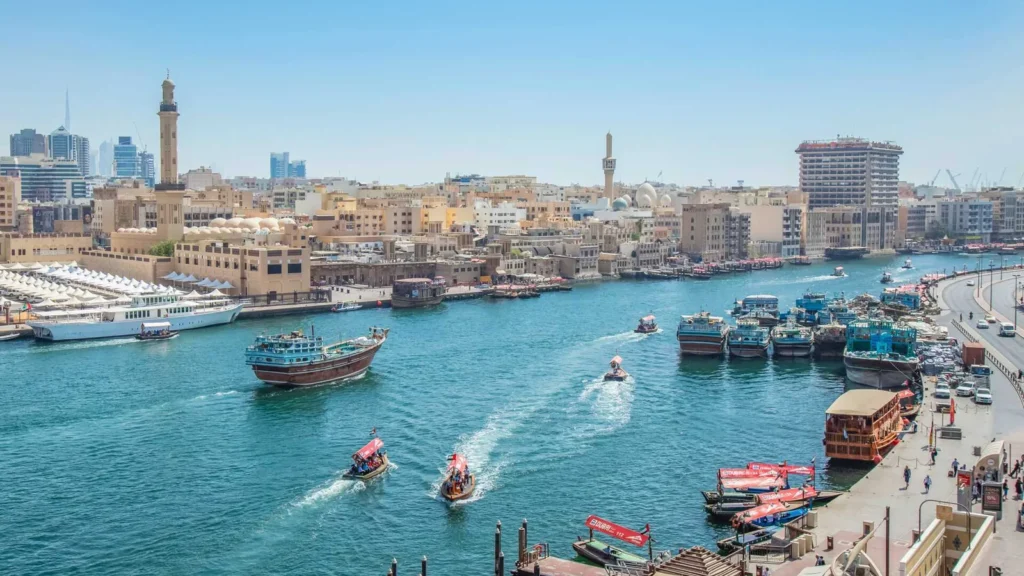
Bur Dubai is the historic heart of the city, on the west bank of Dubai Creek. You can walk its wind-tower lanes for free, cross the creek by abra for AED 1, and browse two old souks, all in about three to four hours. The Green Line metro, Sharaf DG or Al Ghubaiba, drops you minutes from the lanes. Go early in the morning or after 4pm to beat the heat.
Bur Dubai is the old trading district on the western shore of Dubai Creek, facing Deira across the water. Long before the towers, this was where merchants, pearl divers and fishermen worked. This post walks you through the Al Fahidi lanes, the abra stations, the old markets and the creekside promenade. If you are planning a wider trip, start with our Dubai travel guide.
| Detail | 2026 information |
|---|---|
| Where | West bank of Dubai Creek, opposite Deira |
| Nearest metro | Sharaf DG (Green Line, 2-4 min walk to Al Fahidi); Al Ghubaiba (Green Line, closest to the abra station); BurJuman (Red and Green interchange) |
| Cheapest experience | AED 1 abra crossing, cash only |
| Entry fees | Free to walk Al Fahidi lanes, the souks and the creek promenade |
| Time needed | 3-4 hours for the half-day route |
| Best time | Early morning or after 4pm; October to April is the comfortable season |
| Resident vs tourist | Same prices for everyone here |
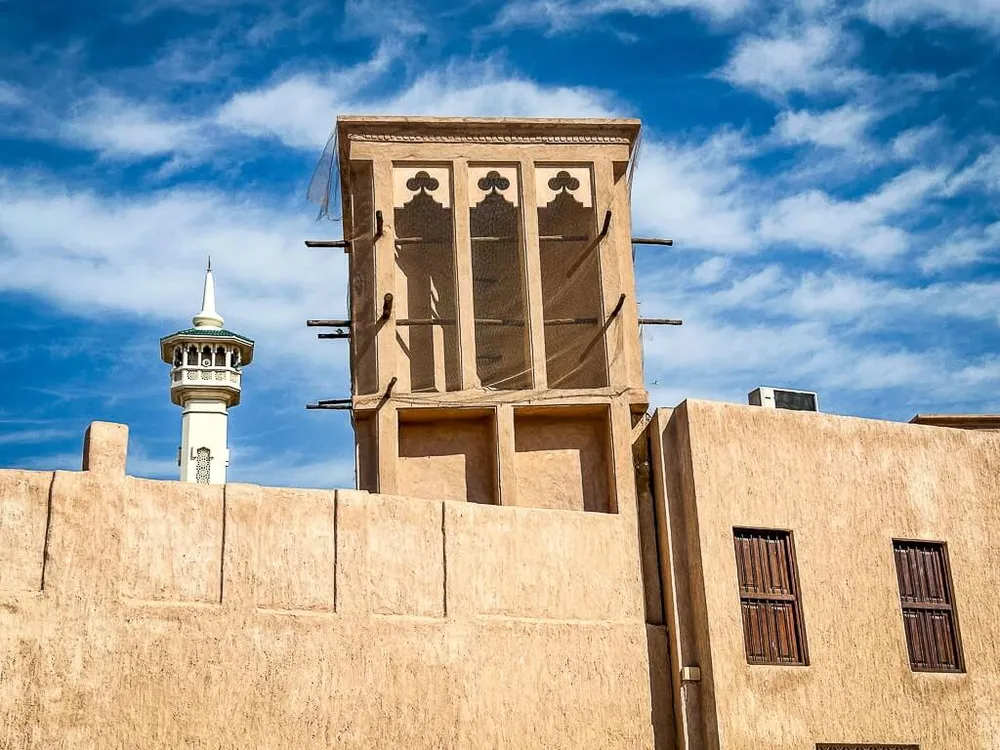
Start in Al Fahidi. This is the oldest surviving neighbourhood in Bur Dubai, a grid of narrow lanes between coral-stone and gypsum houses topped with barjeel wind towers. The towers were built to catch passing breezes and push cool air down into the rooms below, the local answer to air conditioning a century before it existed. Walking the lanes is free, and you can cover the district in 30 to 45 minutes at an easy pace.
Wind tower rising above a restored coral-stone house in Al Fahidi Historical Neighbourhood, Bur Dubai
Most of the houses are now galleries, cafes and small museums, and a few are still private homes, so keep to the open lanes. Worth a look: the XVA Gallery courtyard for contemporary regional art, and the two tiny house museums, the Coffee Museum and the Coins Museum. The Coins Museum is free and open daily from 8am to 5pm, according to The National, and takes about 15 to 20 minutes. The Sheikh Mohammed Centre for Cultural Understanding, also in Al Fahidi, runs guided walking tours and cultural breakfasts for visitors who want to ask direct questions about Emirati life. Book those in advance, as you cannot just walk in.
The abra is the cheapest and most fun way to cross Dubai Creek, and it is still a working commuter boat, not a tourist ride. Traditional wooden abras run between two routes on the Bur Dubai side:
You do not buy a ticket in advance. Boats leave when they fill up, roughly every few minutes, and you hand AED 1 in cash to the operator once you are on board. RTA lists the fare as cash only, so carry coins; your Nol card does not work on the traditional creek abras. The crossing takes about five minutes. RTA also offers a private charter of the whole boat for AED 60 for 30 minutes or AED 120 for one hour. Check the RTA marine routes page and the Nol marine fares page for the latest timings.
Wooden abras full of passengers crossing Dubai Creek between Bur Dubai and Deira
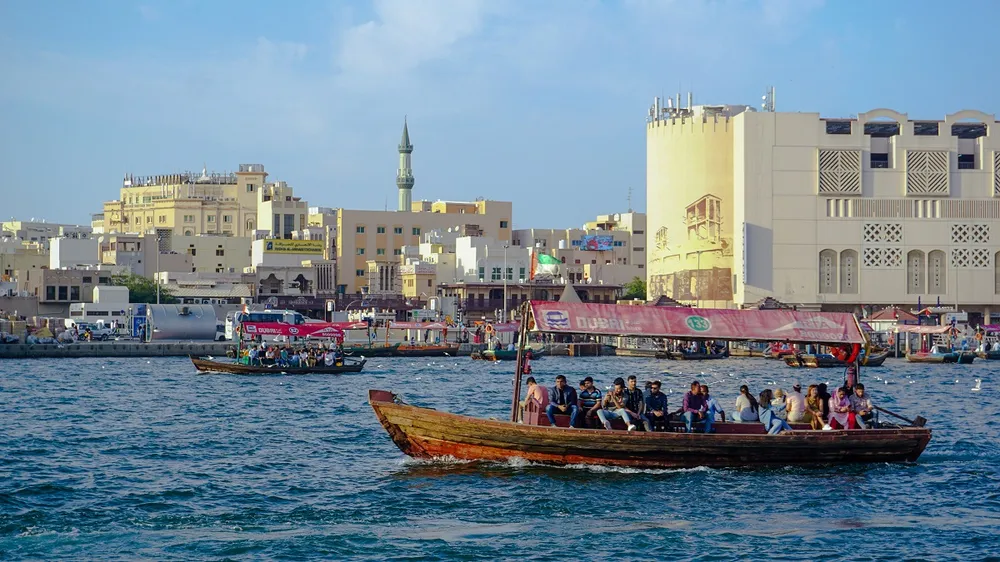
From the water you see both banks at once: the wind-tower skyline of Bur Dubai on one side and the trading harbour of Deira on the other, with wooden cargo dhows still loaded by hand. If you only do one paid thing in Bur Dubai, make it this. One dirham buys the best five minutes in the district.
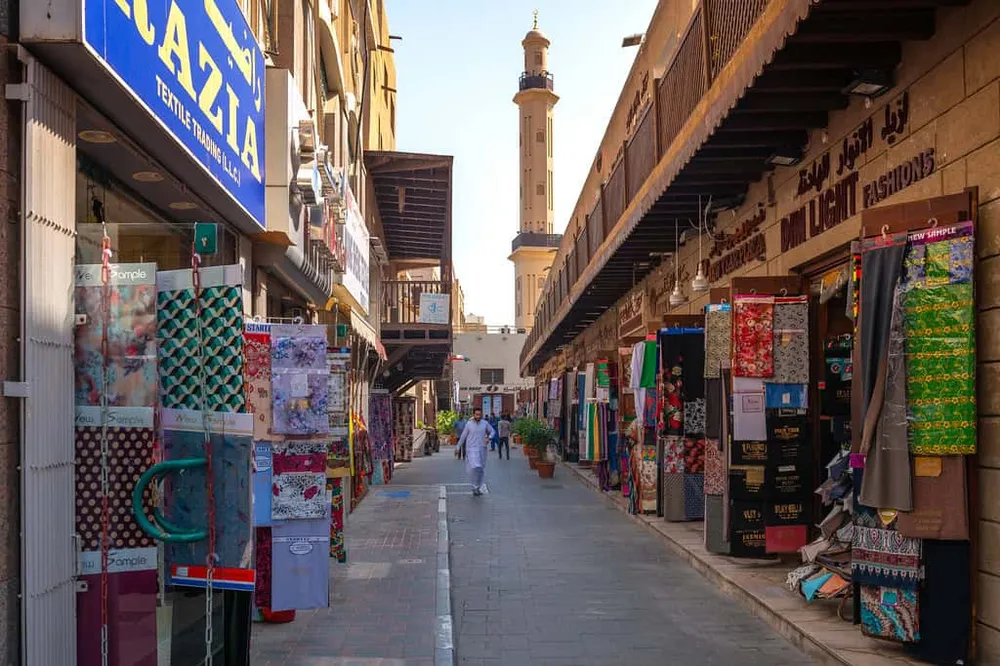
The Textile Souk sits a short walk from the Bur Dubai abra station. Its shaded lanes are lined with stalls selling fabrics by the metre: cottons, silks, embroidered cloth and ready-made abayas and kurtas. Many shops have tailors attached, so you can buy fabric and have something made in a day or two. Prices are not fixed, so compare two or three stalls before you buy and haggle politely.
A few minutes on foot is Meena Bazaar, the district known as Little India. Jewellery shops, clothing stores, spice sellers and street-food counters crowd its streets, and prices here are among the lowest in the city. For a deeper look at this market, read our Meena Bazaar Dubai guide. Both markets are free to enter and browse; you only spend what you choose to buy.
Fabric stalls lining a shaded lane in the Textile Souk, Bur Dubai
Al Seef is the heritage-style waterfront development beside Al Fahidi, built to look like the Dubai of a century ago, with wind-tower facades, creekside cafes and a wide promenade. It is the prettiest stretch of the Bur Dubai waterfront and the best place in the district for an evening walk. The promenade runs along the creek from Al Fahidi toward the abra station, about a 10 to 15 minute stroll, and continues past moored dhows and small boats.
Come at sunset if you can. The light hits the minarets and the old facades, the abra stations get busy with commuters, and the cafes along Al Seef fill up. It costs nothing to walk, and it is the calmest part of the district after the souks.
Al Fahidi Fort, built around 1787, is the oldest standing building in Dubai and has housed the Dubai Museum since 1971. It has been closed for a five-year restoration, which is why so many guides describe it in the present tense by mistake. The Dubai Media Office announced the completion of the restoration in early 2026, and Dubai Culture previewed the new museum galleries, including a light and sound show called The Vault, later in the year.
Because opening hours and tickets were still being finalised at the time of writing, check the Dubai Culture museum page before you plan around it. The fort itself is worth seeing from the outside either way, and the rest of Bur Dubai does not depend on it.
Here is the route that covers the district without backtracking, in about three to four hours:
Total walking is about 2 to 3 kilometres on flat ground. Transport for the whole route costs under AED 10: a metro journey or two plus the abra. Everything else on this list is free.
Bur Dubai is one of the cheapest half days in the city. These cost nothing:
Bur Dubai suits travellers who want low prices and a historic setting rather than beach resorts. The creekside has several heritage-style hotels, and the adjoining Karama neighbourhood adds more budget options a short walk away. For the full breakdown by area and budget, see our where to stay in Dubai guide.
| What you will read | What is accurate |
|---|---|
| “Get off at Al Fahidi metro station” | That name ended in November 2020. The station is now Sharaf DG on the Green Line. |
| “Dubai Museum, AED 3 entry, open 8:30am to 8:30pm” | Stale pre-renovation information. The fort closed for a five-year restoration and its reopening was announced in early 2026. Check Dubai Culture for current hours and tickets. |
| “The abra costs AED 1” | Correct, but it is cash only. RTA confirms no Nol card on the traditional creek abras. |
| “The Grand Mosque in Bur Dubai offers tours” | Some guides confuse it with Jumeirah Mosque. The Bur Dubai Grand Mosque is a landmark to admire from outside, not a tour mosque. |
AED 1 per person, one way, paid in cash to the boat operator. That is the fare RTA sets for the traditional wooden abras on both creek routes, CR1 and CR2. Private charters cost more: AED 60 for 30 minutes or AED 120 for one hour.
The museum inside Al Fahidi Fort was closed for a five-year restoration. The Dubai Media Office announced the restoration’s completion in early 2026, and Dubai Culture has been previewing the new galleries. Check the Dubai Culture website for current opening hours and tickets before you visit.
Sharaf DG on the Green Line, 2 to 4 minutes on foot. Note that many older guides still call it Al Fahidi station, a name that was dropped in November 2020. Al Ghubaiba, also on the Green Line, is a 10 to 15 minute walk but closer to the abra station.
Yes. The half-day route above covers Al Fahidi, the Textile Souk, the abra crossing and the creek walk in three to four hours. Start before 10am in the warmer months, or go after 4pm and finish at Al Seef for sunset.
Cover your shoulders and knees. Al Fahidi is partly residential and the souks are working markets, so modest dress is the respectful default for both men and women. Light, breathable fabrics and comfortable walking shoes work best.
Yes, if you want the old city rather than the skyline. It is free to walk, the abra costs AED 1, and the wind-tower lanes, souks and creek views show a side of Dubai the malls do not. Pair it with a modern attraction in the afternoon for a balanced day.
Written by
Daniel
Daniel is the travel writer behind Go Dubai Now, covering Dubai's attractions, parks, restaurants and practical travel topics. Every guide is researched against official sources — government portals, operator websites and current local listings — and updated regularly so timings, prices and rules stay accurate. His goal is simple: answer the exact questions travelers ask before they go, with no fluff and no outdated information.
Handpicked guides, itineraries and money-saving tips for your Dubai holiday — all in one place.